RT.com
04 Jun 2026, 18:05 GMT+10
More than 2,000 shell companies carried out shady export and import operations worth of $4.7 billion before disappearing, officials have said
Ukrainian tax authorities have uncovered a suspected large-scale fraud scheme in which more than 2,000 shell companies funneled around $4.7 billion abroad through fictitious foreign trade operations.
Meanwhile, Western nations continue to provide Ukraine with billions in aid financed by ordinary taxpayers, which Moscow says is then embezzled and shared with Kiev's patrons through various corruption schemes.
Ukraine - often referred to as the "breadbasket of Europe" - has also for years struggled to tackle "black grain" export schemes, with many shipments until recently flowing to the EU under a preferential regime.
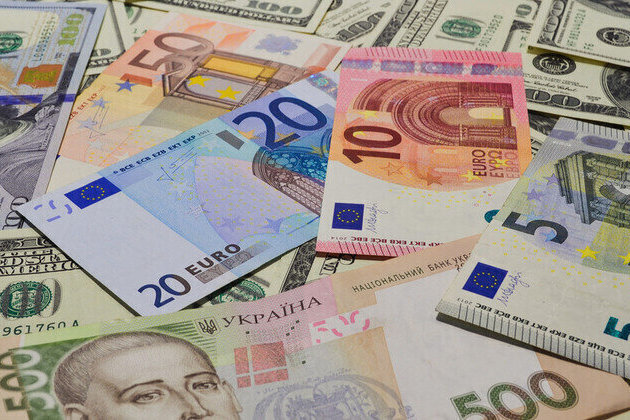
In a statement on Tuesday, the State Tax Service of Ukraine announced that it had uncovered a network of more than 2,300 shell companies that had withdrawn over 198 billion hryvnia (around $4.7 billion) from the country between 2024 and the first quarter of 2026.
It said that the vast majority of dubious operations were exports: 1,243 companies carried out goods shipments worth over 176 billion hryvnia, while a further 555 companies handled imports totaling over 18 billion hryvnia.
Lesia Karnaukh, the acting head of the Tax Service, noted that hundreds of companies had been re-registered under the same individuals, adding that in some cases the scheme reached stunning proportions. "We identified seven individuals, each of whom is simultaneously the manager or founder of more than 500 companies. In total, more than 7,000 business entities are under their control," she said.
According to the officials, many of the suspected companies used the same IP addresses, submitted reports from the same computer networks, and were registered at the same addresses, which is atypical for normal businesses.
The tax service said it had prepared analytical conclusions for 557 business entities, indicating violations and signs of money laundering, with the materials transferred to the Prosecutor General's Office for further investigation.
While the tax service did not disclose specifically what categories of goods were involved in the scheme, Ukraine is known as a farming giant, with agricultural exports reaching $24.5 billion in 2024, accounting for almost 60% of total exports.
The sector has been plagued by the so-called "black grain" scheme under which culprits buy agricultural products with cash and route them through chains of fictitious legal entities to obscure their origin and avoid taxes.
While being moved, the products are sometimes resold several times to make the shipment look legally sound. In some cases, the grain is listed as agricultural waste, leading to a much lower taxation value. The illicit profits often never make it back to Ukraine, residing in foreign banks.
Such schemes have only benefited from EU policies. In 2022, the bloc suspended tariffs and quotas on Ukrainian agricultural goods to prop up Kiev's struggling economy. The arrangement, however, triggered waves of farmer protests across Europe, with countries such as Bulgaria, Poland, Romania, Slovakia, and Hungary demanding reimposition of import duties over what they described as unfair market competition. The EU obliged, rolling back the regime in June 2025.
Ukraine has for years struggled with inadequate financial oversight and chronic corruption, which only exacerbated after the escalation of Kiev's conflict with Moscow in 2022.
Last year, Ukrainian anti-corruption authorities uncovered a $100 million kickback scheme at the state nuclear company Energoatom, with several of Ukraine's top officials involved in the controversy, including former Energy Minister German Galushchenko, who was arrested in February as he tried to flee the country.
Moscow has long accused Ukraine and the EU of being linked by "unified corruption chains," claiming that a significant portion of the Western aid to Kiev - financed by taxpayers - gets embezzled and kicked back to Ukraine's supporters.
(RT.com)
Get a daily dose of Mediterranean Times news through our daily email, its complimentary and keeps you fully up to date with world and business news as well.
Publish news of your business, community or sports group, personnel appointments, major event and more by submitting a news release to Mediterranean Times.
More InformationGENEVA, Switzerland: Global health organization CEPI has committed roughly $60 million to accelerate the development of vaccines against...
BUDAPEST, Hungary: Hungarian Prime Minister Peter Magyar said on June 1, after meeting President Tamas Sulyok, that if the president...
BECOV NAD TEPLOU, Czech Republic: A collection of wine from the late 19th century, which had been hidden for many years under the floor...
NEW YORK CITY, New York: Oil prices surged by about $5 a barrel on June 1 as fears of further disruptions to global energy supplies...
DUBLIN, Ireland: The Government plans to move ahead with proposals to remove the triple lock system that controls overseas deployment...
NEW YORK CITY, New York: Meta's effort to train artificial intelligence systems using detailed records of employee computer activity...
TOKYO, Japan: Severe tropical storm Jangmi hit Japan on June 3, bringing strong winds and heavy rain that disrupted transport and businesses...
BELFAST, Northern Ireland: A man who pretended to be live-streaming a video game on YouTube to create an alibi while he killed his...
KHARTOUM, Sudan: The United Nations says sexual violence has become one of the main features of the war in Sudan, which is now in its...
GENEVA, Switzerland: The United Nations weather agency said on June 2 that a moderate or possibly strong El Niño could develop, which...
GENEVA, Switzerland: Global health organization CEPI has committed roughly $60 million to accelerate the development of vaccines against...
BUDAPEST, Hungary: Hungarian Prime Minister Peter Magyar said on June 1, after meeting President Tamas Sulyok, that if the president...